

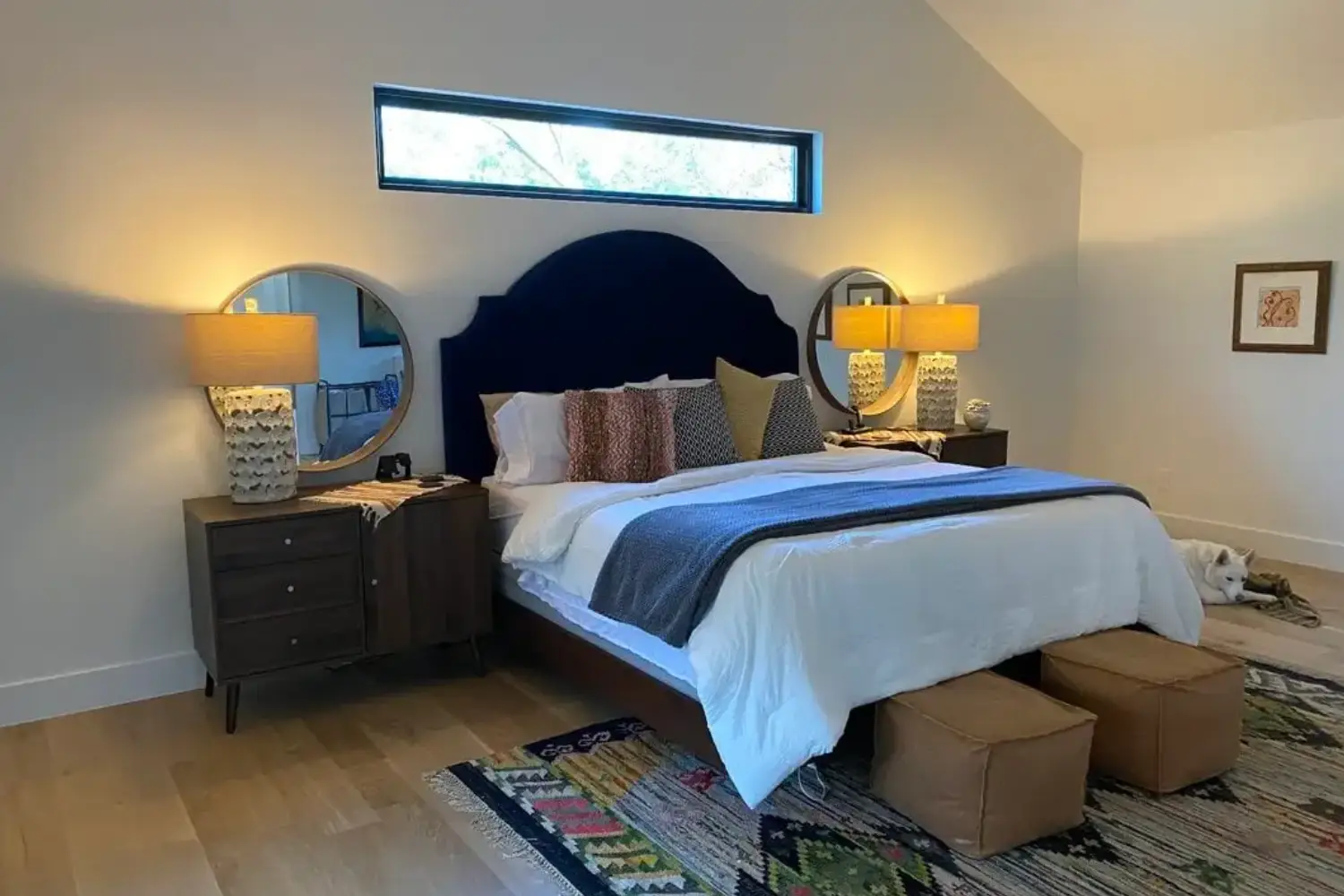
The careful selection and placement of furniture influences the sense of light. Bulky, dark, heavy pieces that sit directly on the floor absorb light and block the flow of vision. Choosing furniture with legs that are visible, in lighter woods or painted finishes, allows the floor to extend visually underneath, making the room feel larger and less obstructed. Glass or acrylic tables are especially effective, as they practically disappear. Keeping furniture arrangement low and open, particularly near the window, ensures that whatever daylight enters the room can travel as far as possible without being blocked.
Advertisement
Window treatments can make a surprisingly significant difference. Heavy, dark curtains that stack deeply over the sides of the window frame rob precious light during the day. Fitting a curtain pole that extends well beyond the window so that the curtains, when open, stack fully on the wall rather than over the glass, maximises the glazed area. Choosing a sheer, lightweight fabric such as linen or voile for a top layer, with a heavier curtain that can be drawn at night, provides privacy and insulation without sacrificing daylight. Roman blinds that tuck away neatly when raised are another excellent solution, particularly in small rooms.
Finally, the quality of artificial lighting fills the gap when natural light is scarce. A single central ceiling light creates harsh shadows and does little to make a room feel inviting. Multiple layers of light—a combination of floor lamps, table lamps and wall lights with warm-toned LED bulbs—create pools of brightness that mimic the effect of daylight entering from different directions. Uplighters placed behind furniture or plants can wash a wall or ceiling with a soft glow, visually expanding the space. With these considered adjustments, a dark room stops being a limitation and starts to become a quiet, cocooning space that feels intentional and serene, whatever the weather outside.