

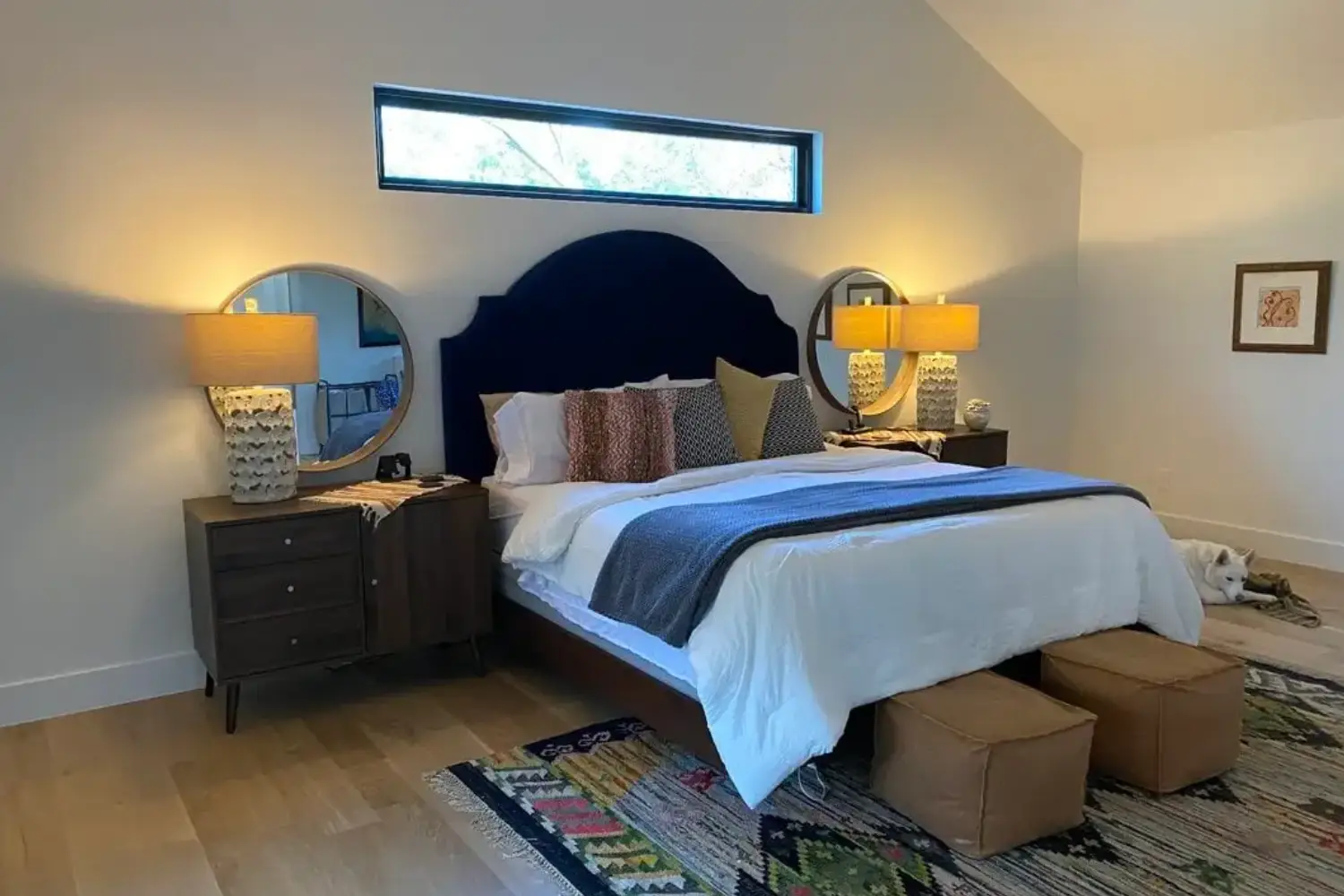
A room that lacks natural light can feel gloomy and uninviting, a common challenge in many British homes where small windows, north-facing aspects and the general greyness of winter combine to reduce brightness. While structural changes such as adding a skylight or a glass panel may not be practical, a combination of clever decorating techniques, strategic furniture placement and considered accessories can dramatically improve the perception of light. The eye can be remarkably easy to persuade, and a dark room can become a softly lit retreat rather than a dreary cell.
Advertisement
The most powerful tool is colour. Pale, warm-toned whites and soft creams on walls and ceilings reflect whatever light is available, dispersing it gently around the room. Pure brilliant white should be used with caution in a north-facing room, as it can take on a cold, greyish cast; instead, a white with a hint of yellow or pink base, such as a warm limestone or a soft ivory, creates a healthier glow. The ceiling should be painted in a lighter shade than the walls, or the same colour, to avoid a hard visual boundary that stops the eye from lifting upward. Woodwork in a matching or slightly lighter tone further reduces contrast and keeps the envelope light and airy.
Mirrors are an age-old trick for bouncing daylight deeper into a room. Placing a large mirror on a wall opposite or adjacent to a window effectively doubles the amount of visible light. The frame should be simple and, ideally, a pale colour—gilt, silver, white or light wood—to avoid absorbing light. A collection of smaller mirrors, arranged as a gallery, can also play with reflections in interesting ways. However, care must be taken with positioning; a mirror that reflects a dark corner or a cluttered view simply amplifies the negative.