

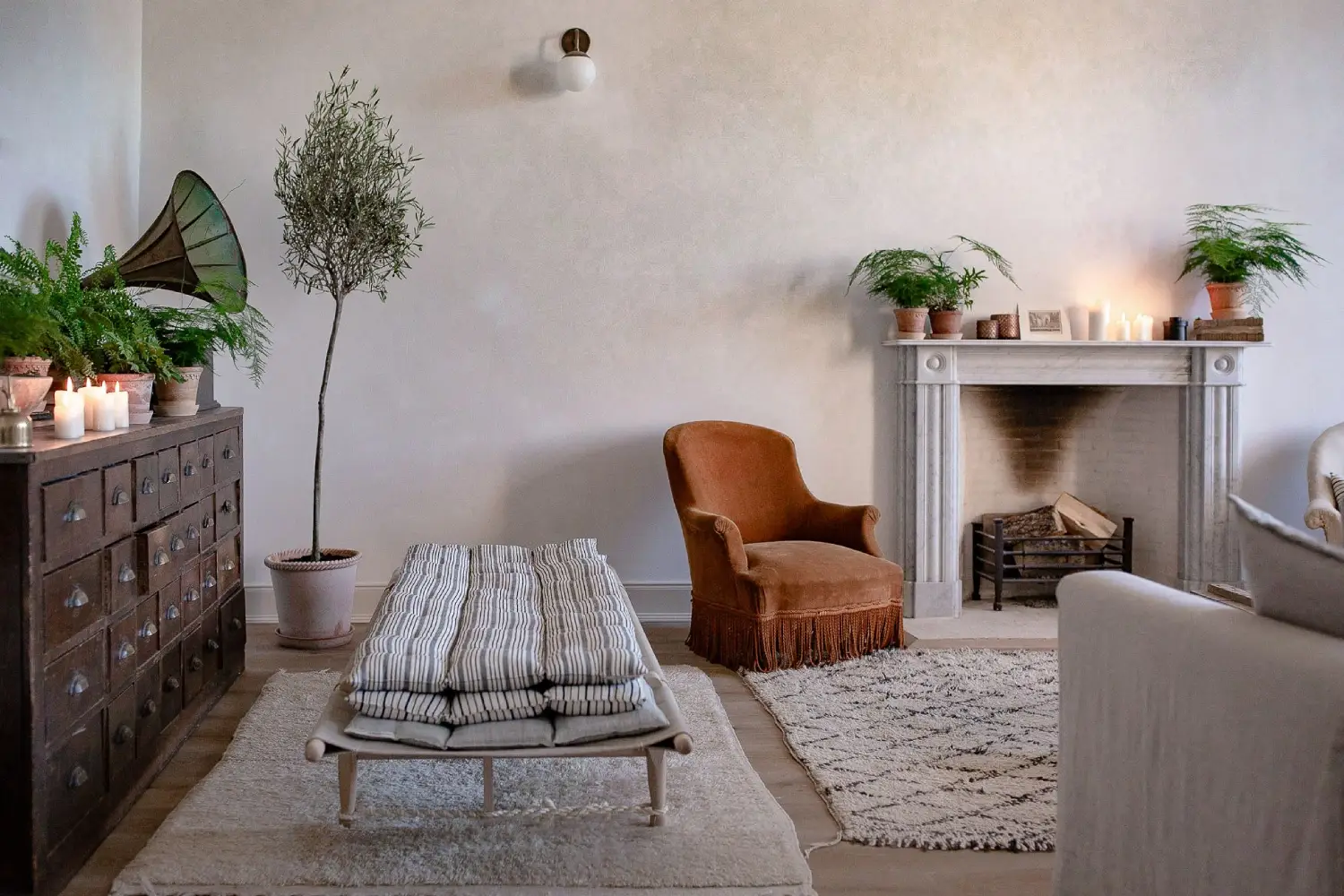
Layering textiles is one of the most effective ways to build warmth and depth. A vintage Welsh blanket draped over the back of a sofa, linen cushion covers in soft colours, a thick wool rug with a subtle pattern—these elements are added slowly as they are found, often after months of keeping an eye out. Mixing old and new textiles prevents a room from feeling like a period pastiche and instead creates a lived-in, organic feel. Natural materials such as wool, linen, cotton and jute age gracefully and improve with handling, their textures becoming softer and more inviting.
Advertisement
Art and objects of personal significance are what truly define a slowly decorated home. A framed map of a favourite coastal town, a child’s drawing hung with a simple clip, a collection of sea-smoothed pebbles displayed in a glass jar—these items speak of the people who inhabit the space. They do not need to be expensive, only meaningful. By resisting the urge to fill every surface immediately, one leaves room for these personal treasures to accumulate naturally. The result is an interior that cannot be bought ready-made, because it is the unique expression of a life lived.
The environmental and financial benefits of slow decorating are significant, but the deepest reward is emotional. A home that has come together over years feels like a true refuge, a container of memories and a reflection of the tastes and journeys of its inhabitants. When a visitor asks about the unusual pottery jug on the mantelpiece, there is a story to tell, a connection to a place and a time. This is the essence of slow decorating: not perfection, but presence; not completion, but continuous unfolding. It is a gentle, satisfying art that anyone can practise, one thoughtful choice at a time.