

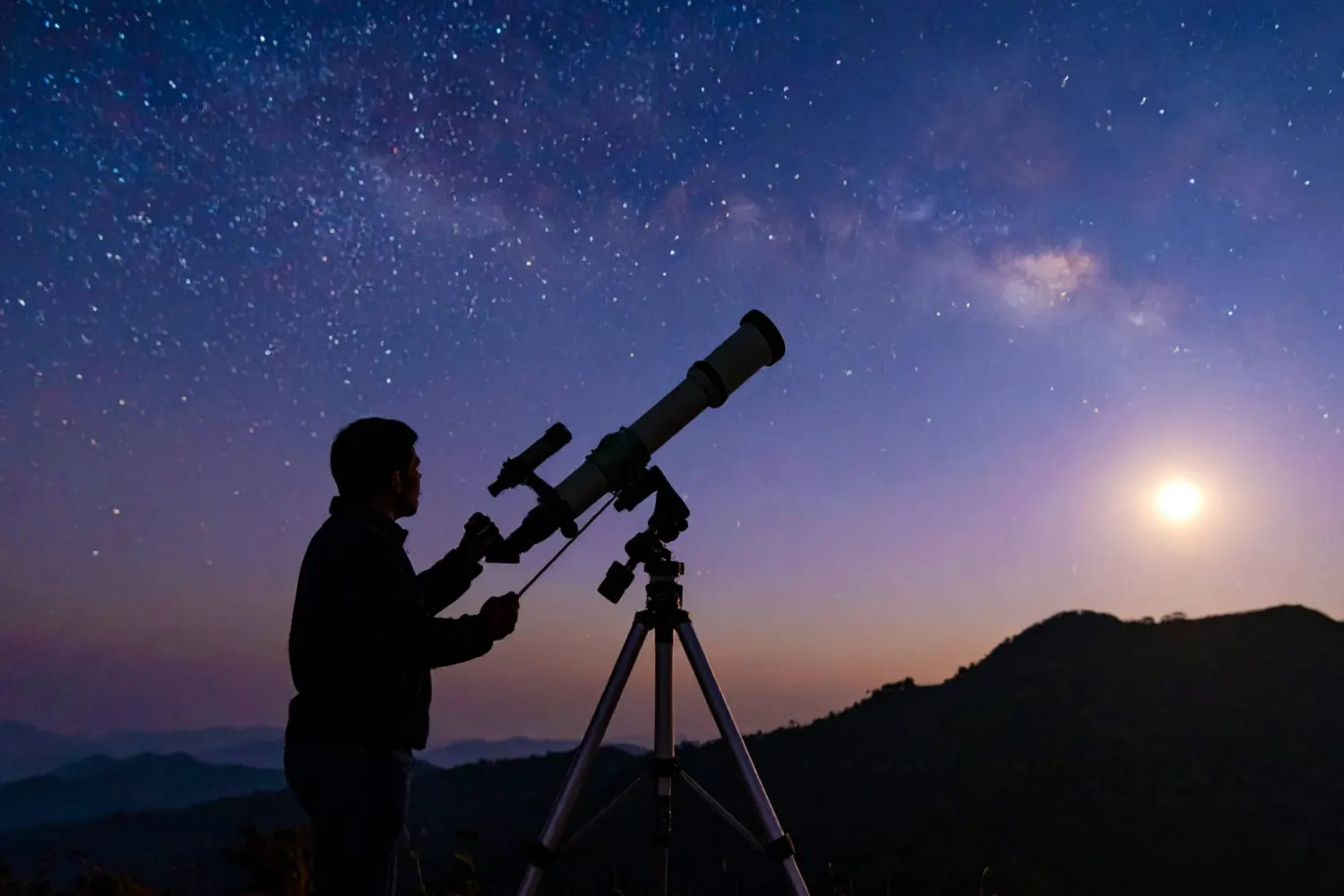
Gazing up at a clear night sky is one of the most ancient of human experiences, yet the sheer scale of the cosmos can still take the breath away. Understanding the basics of astronomy transforms this act of wonder into an informed pursuit, allowing the observer to recognise constellations, track the movement of planets and appreciate the mechanics of eclipses. In Britain, where light pollution can obscure the stars in urban areas, seeking out a darker spot—perhaps a nearby hill, a coastal headland or a designated Dark Sky Reserve—can reveal a sky alive with points of light. The journey from casual sky-watching to amateur astronomy is a gentle one, requiring more patience than expensive kit.
Advertisement
A sensible first step is to learn to identify a handful of prominent constellations and bright stars. The Plough, part of the constellation Ursa Major, is a familiar pattern that points toward the North Star, Polaris, which remains almost stationary in the sky and serves as a reliable orientation tool. Orion, with its distinctive belt of three stars, dominates winter evenings, while the W-shape of Cassiopeia wheels opposite the Plough. Using a simple star chart or a mobile app that overlays the names of celestial objects on the phone’s screen can accelerate this learning. The satisfaction of finding a constellation without digital aid, however, adds to the pleasure.
The moon is the most rewarding object for the beginner. Even without optical aid, the naked eye can discern the dark patches of ancient lava plains, the so-called maria, and the line where light and shadow meet, known as the terminator. A modest pair of binoculars, which many households already own, reveals a world of craters, mountain ranges and subtle grey hues. Observing the moon over successive nights as it waxes and wanes provides a tangible connection to the rhythms of the lunar cycle that have guided calendars and agriculture for millennia. The best time to view lunar craters in sharp relief is along the terminator, a week after the new moon or a week after full moon.