

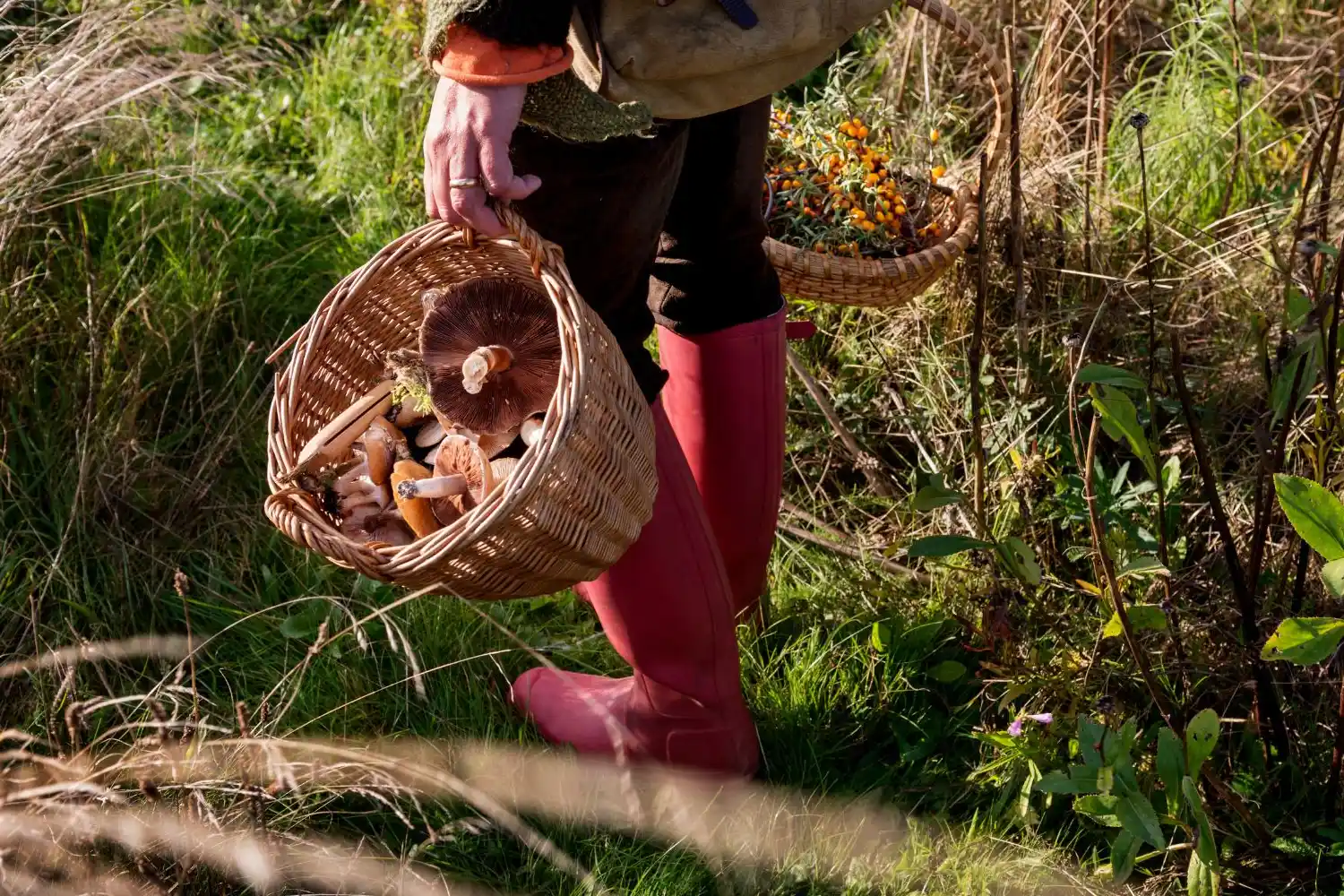
Foraging must be done with a conservationist’s mindset. The countryside is a shared resource, and the forager is a guest. Only ever take what is genuinely needed, leaving plenty for wildlife and for the plants to regenerate. When picking leaves or shoots, take a few from each plant rather than stripping one entirely. Fungi should be cut with a sharp knife at the base rather than pulled from the ground, to avoid damaging the underground mycelium. Some species, such as certain rare mushrooms, are protected by law and must not be picked. Consulting local bylaws and respecting private land is essential; always seek permission before foraging on someone else’s property.
Advertisement
The kitchen is where the foraged haul becomes a celebration. A blackberry and apple crumble, made with fruit gathered from the hedgerow and windfalls from a garden, carries the unmistakable flavour of the season. A simple pasta dish with sautéed chanterelles, garlic and parsley captures the earthy essence of the forest floor. Elderberry cordial, diluted with hot water, makes a soothing winter drink. Even small quantities can be used creatively: a handful of sloes can be pricked and steeped in gin for a Christmas tipple, while a few hawthorn berries add a tangy note to a wild fruit jelly. These homemade preserves and creations become a taste-memory of an autumn day.
Beyond the table, foraging fosters a profound sense of place. The knowledge that a certain lane yields the best early blackberries, that an old oak wood hides a patch of hedgehog fungi after a warm rain or that the sea cliffs where samphire grows are reachable only at low tide creates a personal map. This map is woven not just from landmarks but from tastes, smells and the recollection of weather. Foraging in autumn is a slow, attentive practice that rewards not just the senses but the spirit, offering a direct, unmediated relationship with the wild generosity of the British countryside.