

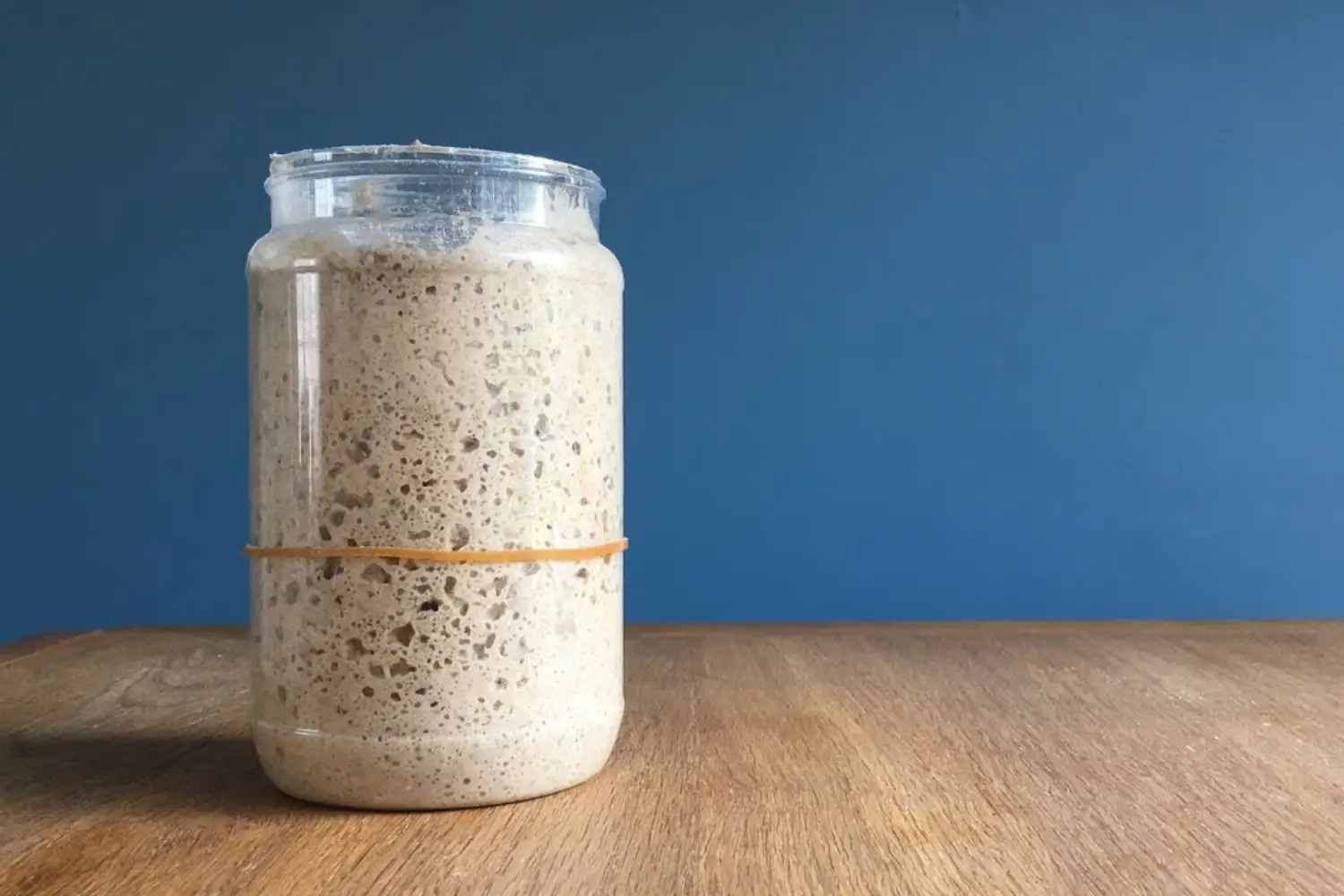
Maintaining a mature starter fits easily into a weekly rhythm. If baking often, the starter can be stored at room temperature and fed daily. For those who bake once or twice a week, storing the starter in the refrigerator reduces the need for daily feeding; it can be taken out the night before baking, fed and left on the counter to become active. A healthy starter is remarkably resilient. Even if left neglected in the back of the fridge for a couple of weeks, a layer of dark liquid, called “hooch,” may form on top. This can simply be poured off or stirred back in before resuming regular feeds, and the culture normally revives within a day or two.
Advertisement
Baking with a starter introduces a new rhythm to the kitchen. A basic sourdough loaf, made with flour, water, salt and a portion of bubbly starter, takes the better part of a day to rise through successive stages of folding and proofing. This slow fermentation is the secret to sourdough’s depth of flavour, its open, chewy crumb and its digestibility. The long fermentation allows enzymes to break down gluten and phytic acid, which some people find gentler on the stomach. The first few loaves are often imperfect—a little flat, a touch gummy—but the learning curve is part of the joy. No two bakes are precisely alike, and the baker slowly develops an instinct for the dough.
Beyond the practical reward of a crusty, aromatic loaf, maintaining a sourdough starter brings a quiet, meditative quality to the week. The daily feeding, the gentle stir, the observation of bubbles and the faint sour note on the nose ground the baker in the present moment. In a world of instant gratification, sourdough insists on its own pace. It is a reminder that some of the most nourishing things in life cannot be hurried, and that a little jar of flour and water, tended with care, can form the heart of a kitchen.